Camping3 min readBy Mağusa Av Market
Layering Clothing for Camping and Hunting
Why the three-layer system works, which fabric belongs to which layer, and why cotton is your enemy in the field.
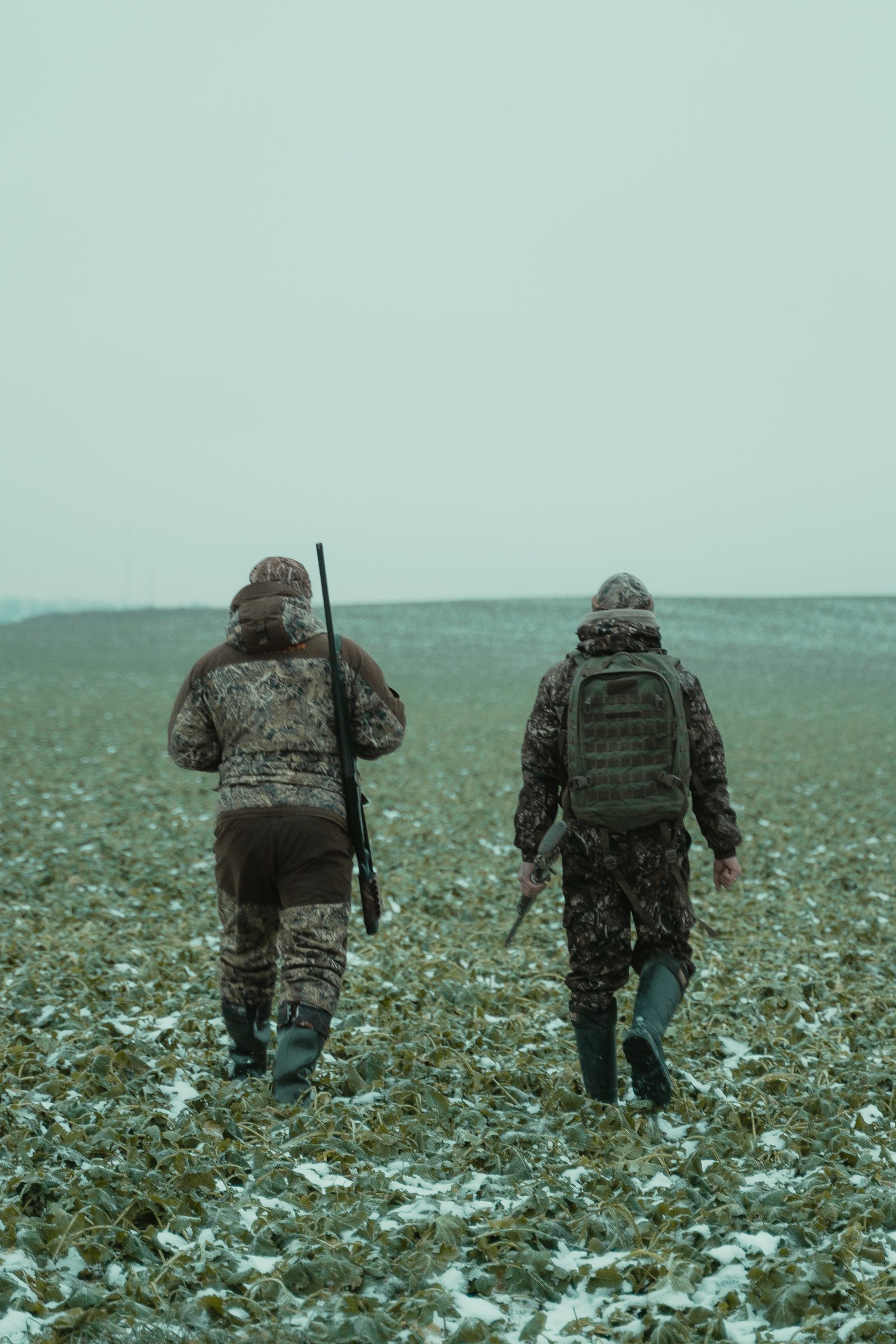
Feeling cold in the field is usually not about dressing too thin but about dressing wrong. Every hunter who sweated on the morning walk and shivered at the noon break knows it. The answer is not one thick jacket but three layers you add and remove as needed.
Layer 1 — Base: move sweat away
The layer against your skin has one job: move sweat off the skin. Use merino wool or synthetic (polyester/polypropylene) fabric. Merino resists odour and keeps warming when wet; synthetic dries faster and costs less.
Cotton is the enemy in the field: it absorbs sweat, never dries, and wet cotton pulls body heat away fast. A cold morning that starts in a cotton T-shirt ends at noon in shivers.
Layer 2 — Mid: hold the heat
Fleece, a wool sweater or a lightly insulated vest. This layer warms by trapping air. Take it off while walking, put it on at breaks — so it has to pack small. A sleeveless vest is ideal for hunting: it warms the core, frees the arms and does not get in the way of shouldering the gun.
Layer 3 — Shell: block wind and water
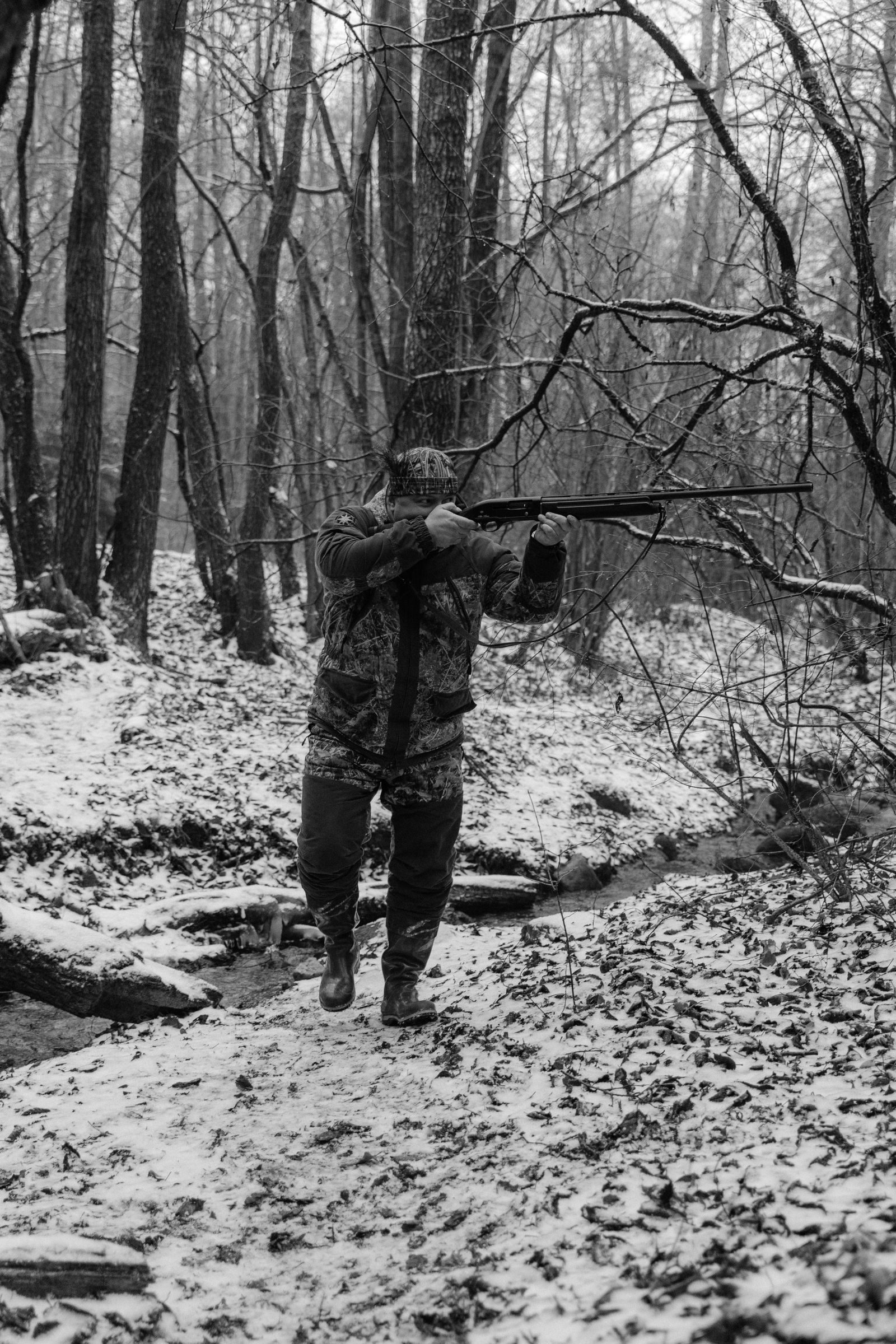
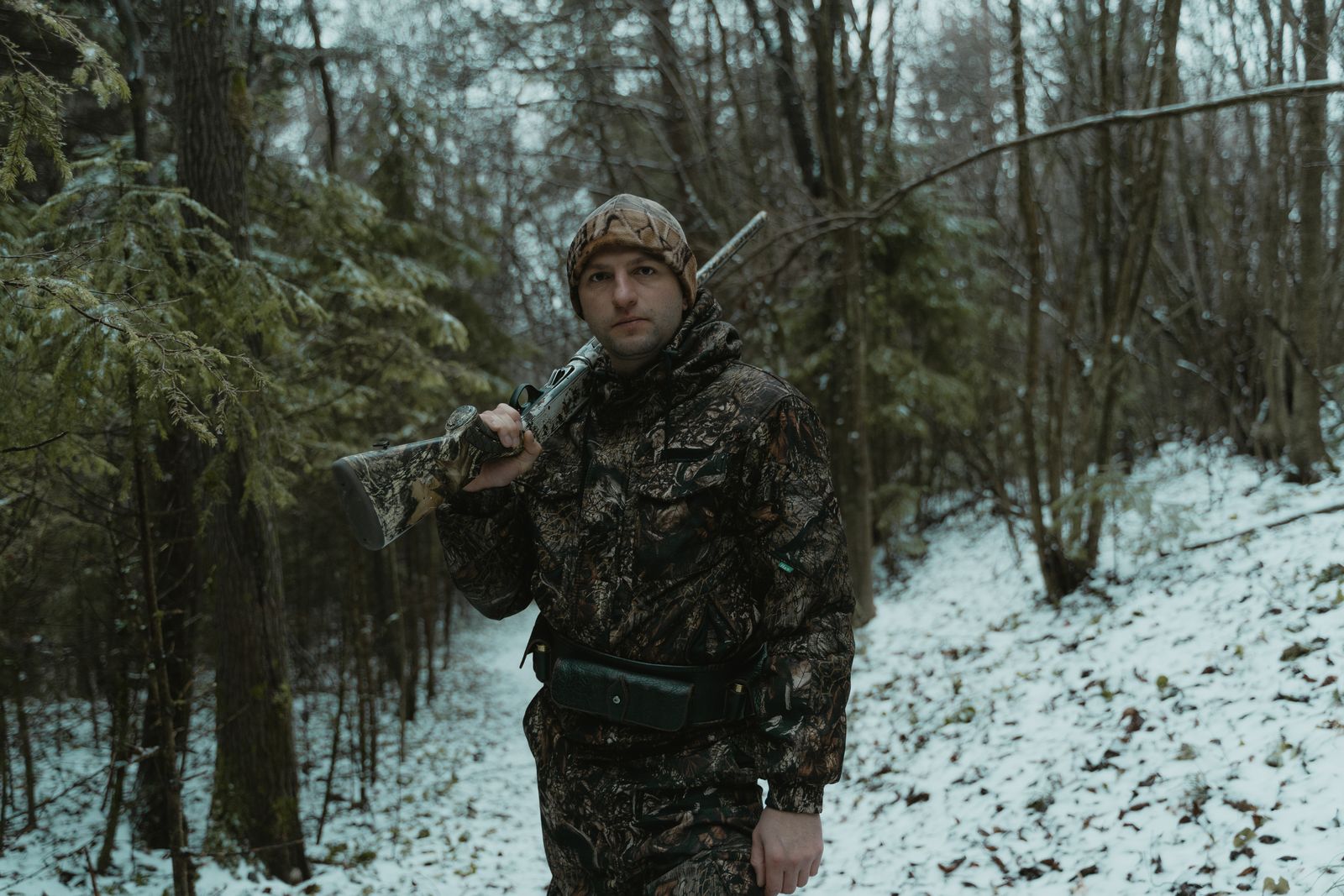
A waterproof, breathable shell. Quiet fabric matters for hunting; rustling nylon spooks birds. A hood, adjustable cuffs and underarm vent zips are the three features to look for. Camouflage should match the terrain: brown-green tones for scrub, yellow-brown for reeds.
Lower body
Same logic: synthetic base tights, sturdy outer trousers. Reinforced knees and shins last much longer in thorny scrub. Trouser legs should be narrow enough to tuck into boots or be sealed with gaiters; the fastest way to wet socks is water coming in at the cuff.
Feet and hands
Wool socks, two layers: a thin liner plus a thick outer sock reduces friction and prevents blisters. Hunting gloves need a free trigger finger; in camp, carry thick gloves separately from trigger gloves.
Head and visibility
A large share of heat escapes through the head. A beanie and a hat always in the bag. While hunting, an orange hat or vest keeps you visible to other hunters; birds do not see orange as well as humans do.
Additions for camping
Set aside a dry spare base layer for the night — what you wore during the day never goes into the sleeping bag. The bag's comfort rating should be 5 degrees below the coldest night you expect. No bag warms without an insulating mat underneath; the cold comes from the ground.
Quick list
- Base: merino or synthetic, never cotton
- Mid: fleece or vest, packs small
- Shell: quiet, waterproof, breathable
- Lower: synthetic tights + reinforced trousers + gaiters
- Wool socks ×2, trigger gloves, beanie, orange visibility
- Camp: dry spare base layer, mat + correctly rated bag
Layered correctly, the same outfit walks at 5 degrees at dawn and rests comfortably at 20 degrees at noon. Let us try the layers that fit you together in the store.